Why Every Book Has Illustrations (And How They Get Made)
Middle grade readers are visual
Kids aged 10 to 14 are transitioning from picture books to chapter books. Illustrations serve as rest stops. They reward the reader for getting through a chapter and give their imagination a reference point.
A well-placed illustration can make a reader flip back to it three times during a single reading session. That is engagement you cannot get from text alone.
Planning illustrations during the outline
I do not add illustrations after the book is written. I plan them during the outline phase. Each chapter outline includes a note about which moment deserves a visual.
The criteria are simple. Does this moment introduce a new character, creature, or location? Is it a turning point? Would a kid want to show this page to a friend? If yes, it gets an illustration.
Writing the brief
An illustration brief is a short document that describes exactly what the image should show. It covers five things:
- Characters present and their positions
- Environment and key details
- Action happening in the moment
- Mood and lighting
- Important details that must be visible (weapons, creatures, expressions)
The brief is specific enough that the result matches the story but open enough to allow artistic interpretation.
Black and white is a deliberate choice
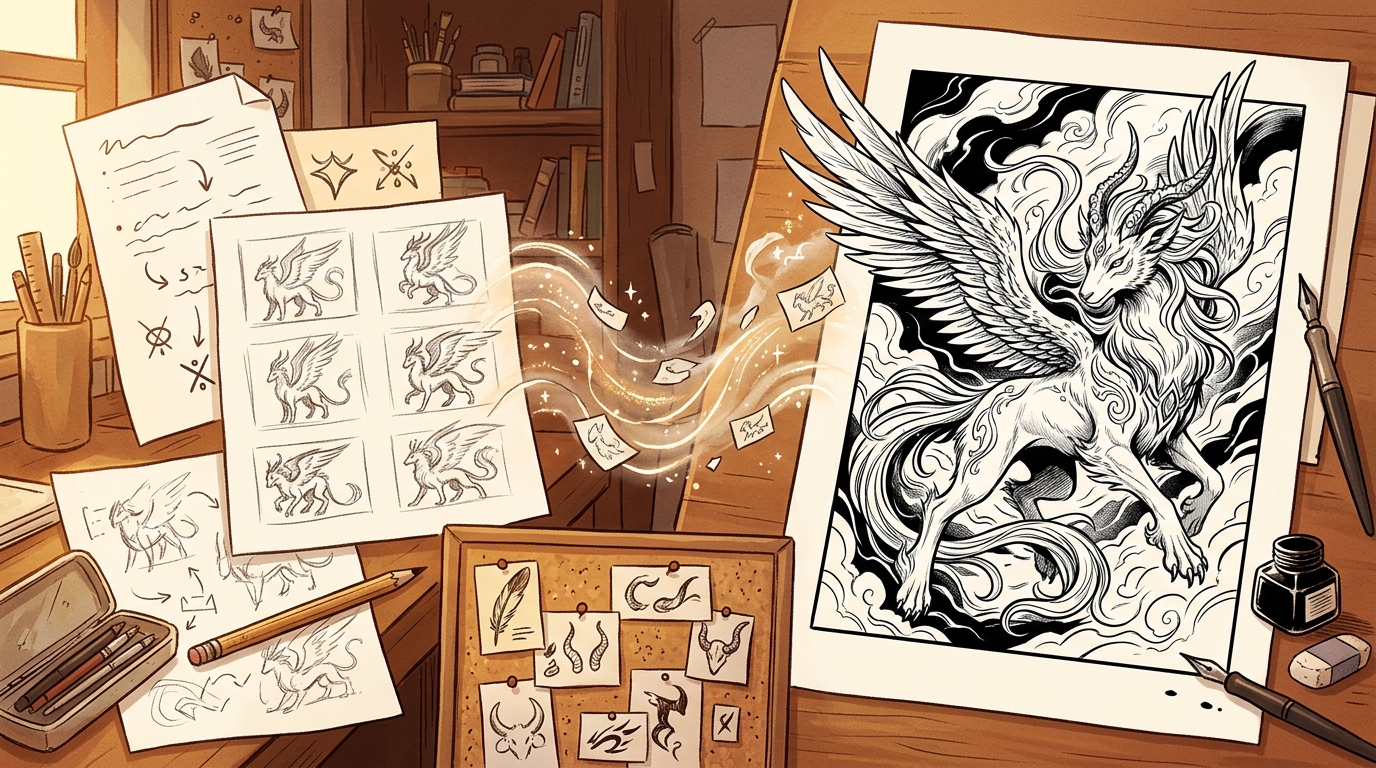
Color illustrations cost more to produce and more to deliver on Kindle. But the real reason I use black and white is aesthetic. Black-and-white art has a graphic novel quality that fits the GameLit genre. It feels like manga. It feels like a game manual. The readers connect with that style.
From brief to final image
The illustration goes through multiple rounds. First pass establishes composition. Second pass refines details. Final pass ensures consistency with the character designs established in earlier books.
Consistency matters across a series. Zara should look like Zara in every book. Pudge should be recognizable whether it is book one or book eight. The series bible includes visual references for exactly this reason.
The result
Each book ships with illustrations at key moments throughout the story. They are sized for Kindle delivery, optimized so they load fast, and placed where they have the most impact.
When a kid reads about Pudge evolving for the first time and then sees it on the next page, that is the moment the book becomes theirs.